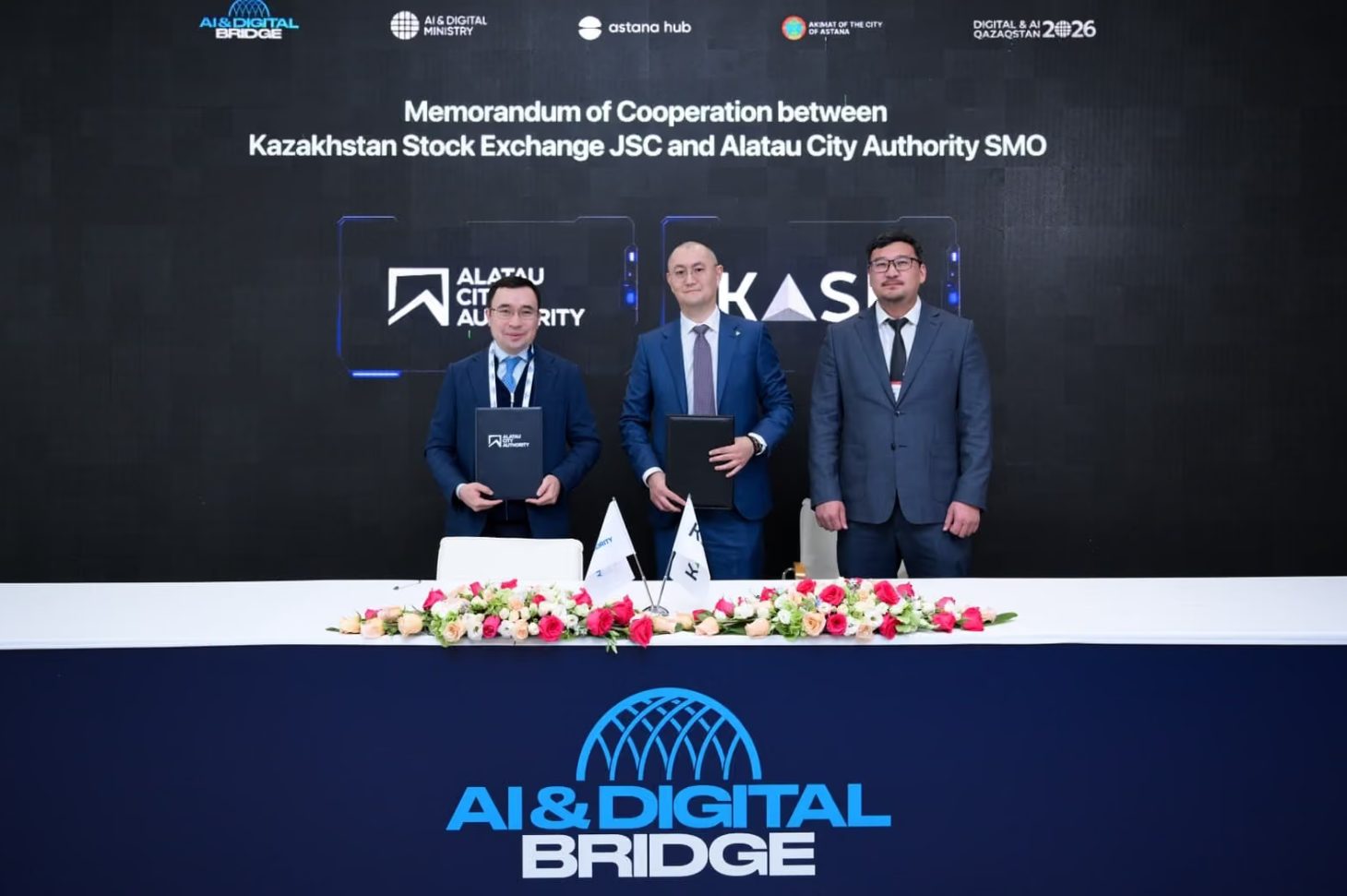
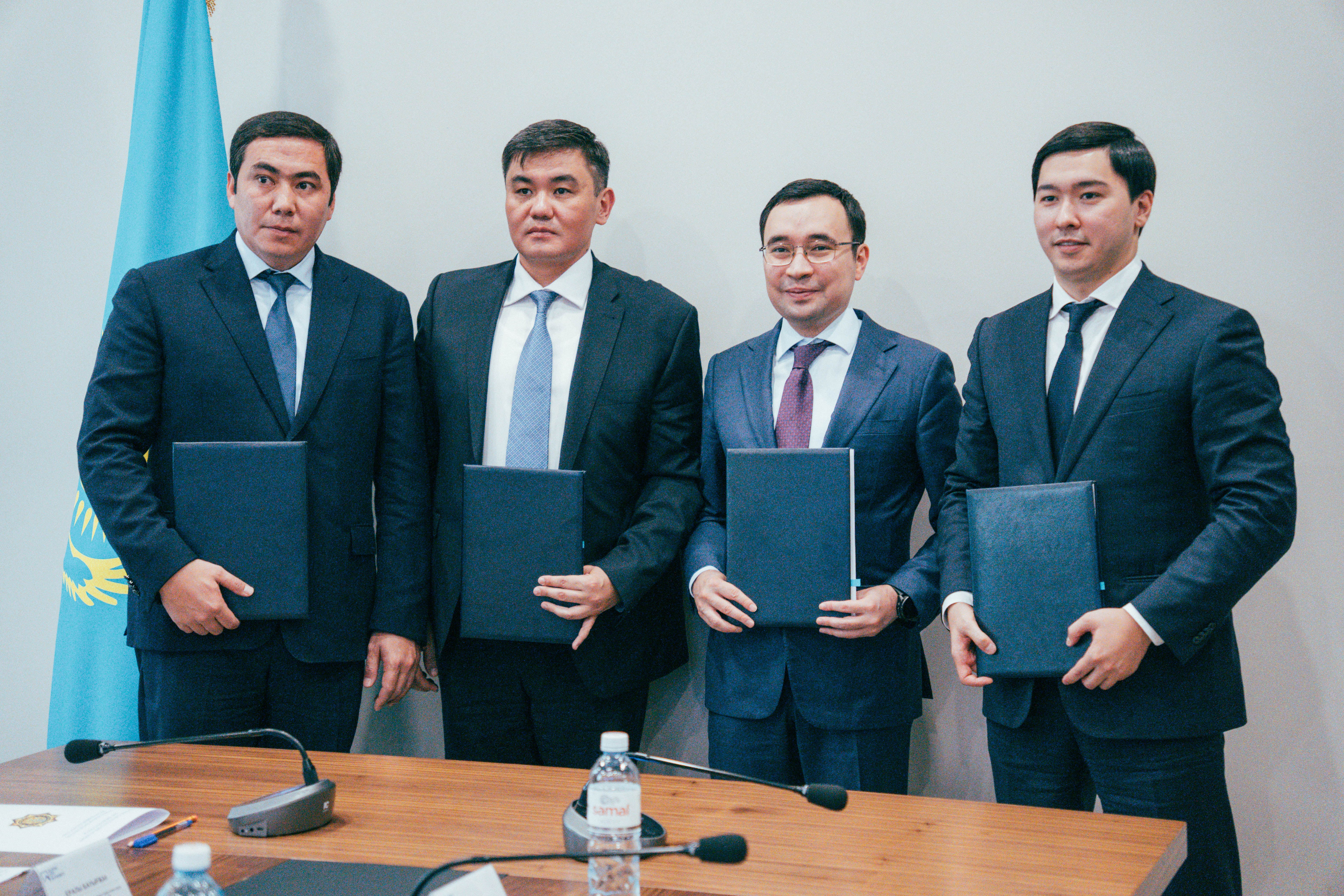
The Parliament holds first reading of the Constitutional Law on the Special Status of Alatau City
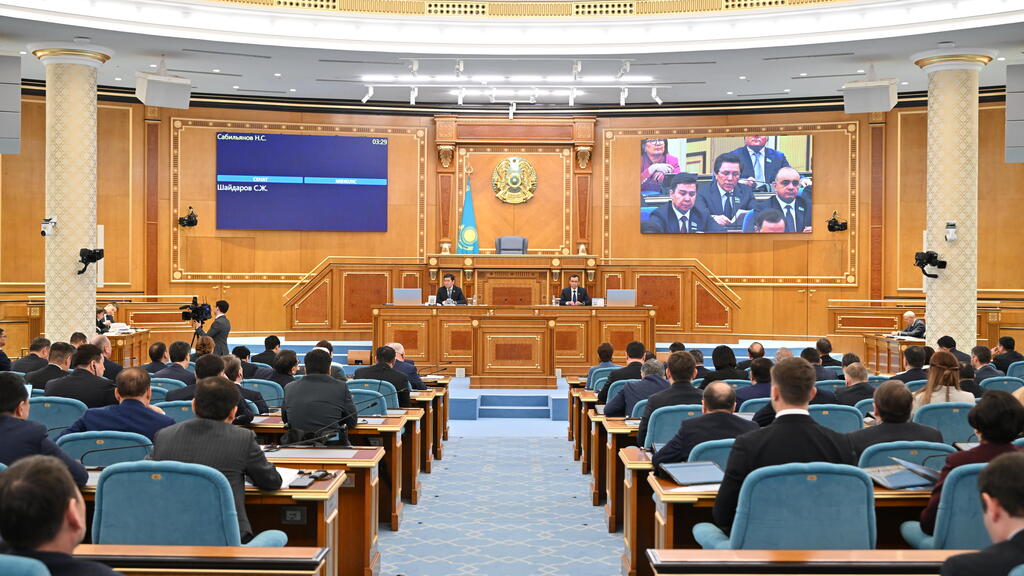
The document, presented by Deputy Prime Minister Kanat Bozumbayev, lays the legal foundation for one of the most ambitious projects in the history of modern Kazakhstan.
The core philosophy of the Constitutional Law is to establish a global hub capable of competing on equal footing with world leaders such as Dubai, Singapore, and Shenzhen. The institutional model of Alatau City was developed with the involvement of international experts who adapted the best governance practices of East Asian and Middle Eastern metropolises to Kazakhstan's realities.
At the core of the document is the principle of "regulatory freedom", which is set to turn Alatau City into a sustainable magnet for global capital.
The development of the Constitutional Law is a logical continuation of the President's Address to the Nation and his Decree of September 26, 2025, which officially granted Alatau City the special status as a city of accelerated development. The draft law elevates this project to the level of a fully-fledged international jurisdiction, securing exclusive incentives and the highest legal guarantees of stability for Alatau City for decades to come.
Two-tier Governance Model
One of the most discussed innovations in the draft law is the city's governance system, divided into two parallel tracks. The developers took into account the experience of global metropolises, where mixing strategic development functions with day-to-day administration often led to excessive bureaucracy and inefficient governance.
The first track covers the city's day-to-day life. The akimat and maslikhat of Alatau City retain full authority over everyday operations. They remain accountable to residents for schools, hospitals, roads, utilities, and social services. The maslikhat continues to serve as the representative body, approving the local budget.
The second track covers development and investment. This area is managed by the Alatau City Authority (ACA) - a new type of institution operating as a single point of contact within a "One-Stop Shop" framework.
The system is headed by a Council chaired by the Prime Minister, which is empowered to issue internal regulations with the force of law. This model enables strategic decisions to be made instantly, bypassing months-long inter-ministerial approvals.
Within the ACA, a professional board of independent experts handles all procedural matters - from issuing business licenses to approving technical regulations.
Explaining the logic behind this division, Kanat Bozumbayev emphasized: "Alatau will become a modern regulatory platform, enabling the implementation of new management and technological solutions in a real urban environment. Successful mechanisms tested in Alatau can later be scaled and applied across other regions of Kazakhstan".
Unprecedented capital protection and land sovereignty
The draft law introduces the concept of an individual business license, which serves as the highest legal guarantee for investors. The license locks in all project terms, tax incentives, and the obligations of the parties.
The Constitutional Law explicitly establishes that these terms cannot be changed unilaterally. To ensure transparency and trust, investors are granted the right to choose their jurisdiction for dispute resolution - between international arbitration and the AIFC Court, which operates under English law.
The approach to land allocation is also fundamentally restructured. In Alatau City, land is treated as a key development resource. The city's special land fund will allocate plots to residents exclusively against specific investment commitments.
"Everything is built on one key principle: land in Alatau is a development tool, not a commodity. Foreign investors will not be able to acquire land ownership. Land is provided exclusively on a temporary leasehold basis", the Deputy Prime Minister stressed.
Financial autonomy
Alatau City's economic sovereignty is underpinned by a new budget model. Unlike the standard system, where budget surpluses are returned to the centre, the ACA's budget is built on the principle of reinvestment. Until 2050, no funds from Alatau City revenues will be transferred to the republican budget - all funds will be directed exclusively to the development of urban infrastructure.
The budget will be approved by Parliament on a three-year block basis, giving the ACA the flexibility to manage resources efficiently.
All funds will be channelled through a separate treasury account, ensuring full transparency and oversight of their use.
Tax incentives will not simply be handed out; they are strictly tied to KPI targets for job creation and the volume of invested capital.
The City of the future: Digital by default
The technological foundation of Alatau City is built on the principle of Digital by default. The city is designed as an intelligent metropolis where artificial intelligence is deeply integrated into all governance processes. This will make Alatau City the region's first platform for regulating and developing future industries such as Web3 and the low-altitude economy (autonomous systems).
Closing his speech in Parliament, Kanat Bozumbayev drew an important historical parallel:
"Forty years ago, China gave Shenzhen one thing - regulatory freedom. Everything was tested there first: drones, electric vehicles, fintech, biotech. Today, Shenzhen is the world's technology capital. Alatau is being built on the same logic. We are removing regulatory barriers first in the region."
The adoption of the Constitutional Law on Alatau City will ensure the long-term strategic predictability that will turn the city into a sustainable magnet for global capital and innovation, setting new standards of living for millions of Kazakhstanis.